Tools.
Download a tool for the job in hand. All of them are free.
Start a digital strategy review.
The free tools I use with schools, in the order I use them.
- 01
See where you stand.
- 02
Ask your staff.
Digital strategy self-evaluation: leaders and staff score it separately.
- 03
Write the strategy.
Beyond the device: a strategy that starts with teaching and learning.
- 04
Set your position on AI.
AI in schools: a practical strategy, and Who is doing the thinking?
- 05
Check it is working.
Inspection.
The 2025-26 ISI cycle, read in full.
Inside ISI Inspections: summary
The headline findings from 394 routine ISI inspection reports, published May 2025 to April 2026.
Inside ISI Inspections: full report
All 52 pages: findings, teaching patterns, the compliance audit and discussion prompts for SLT and governors.
Digital strategy and AI.
For heads and senior leaders setting direction on technology and AI.
Who is doing the thinking?
A fifteen-minute briefing for heads and senior teams. The pupils are already using AI; the question is who stays responsible for the thinking.
Teaching in the age of AI: the STAR framework
A framework for using AI in teaching, organised around four elements that stay human: Spark, Think, Act and Reflect.
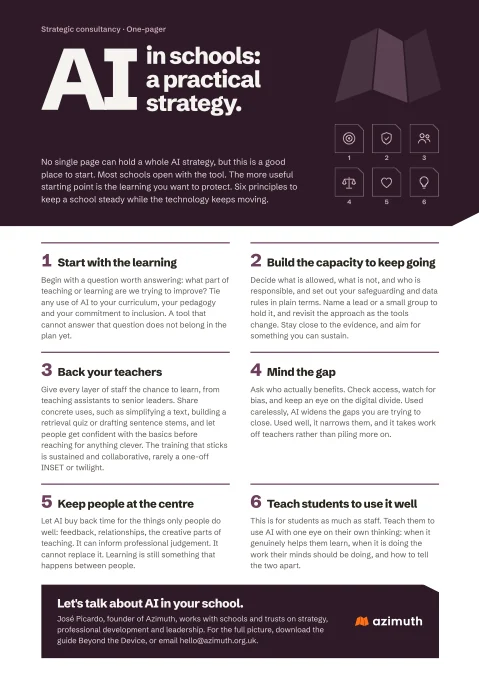
AI in schools: a practical strategy
A one-page strategy setting out six principles for introducing AI in a school, starting with the learning.
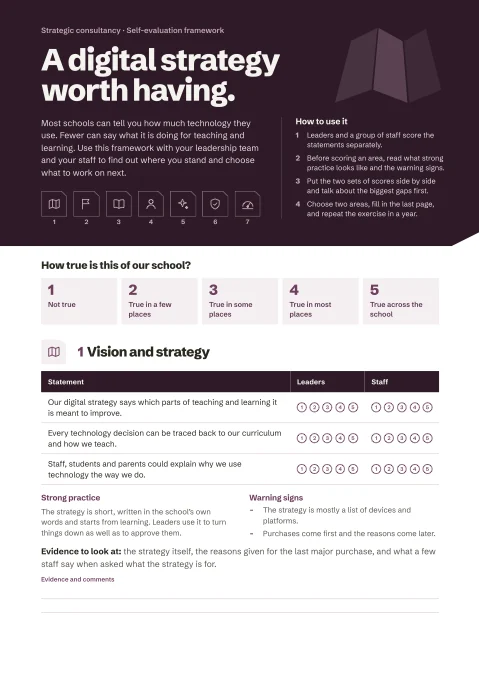
Digital strategy self-evaluation
A self-evaluation for leaders and staff to score separately across seven areas of a school’s digital strategy, including AI, with a page for next steps.
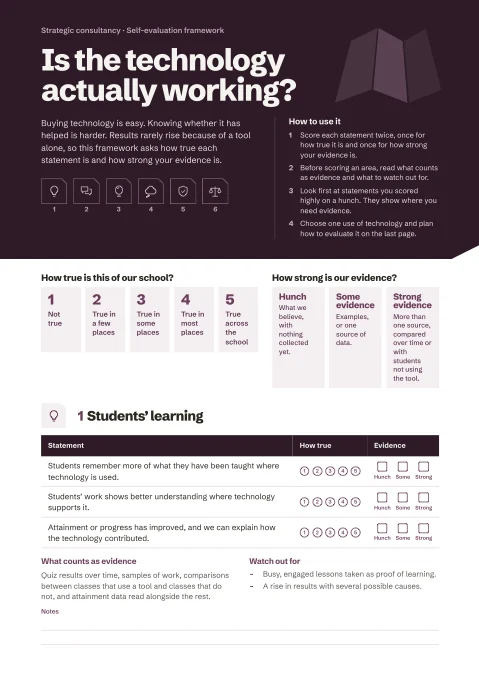
Evaluating the impact of technology
A self-evaluation that scores six areas of technology’s impact on teaching and learning twice, for how true each statement is and how strong the evidence is, with a page to plan an evaluation.
Beyond the device
A guide to building a school digital strategy that starts with teaching and learning.
From purpose to practice
A guide for teachers: seven ways technology can strengthen good teaching, each with something to try next week and the evidence behind it.
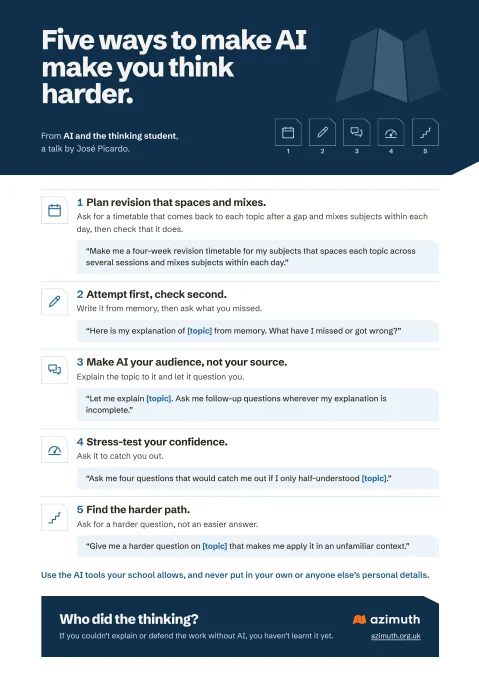
Five ways to make AI make you think harder
A one-page card for students from the talk AI and the thinking student: five habits, each with an example prompt, that keep the thinking theirs.
Teaching and learning.
One-page references for teachers and the people who support them.
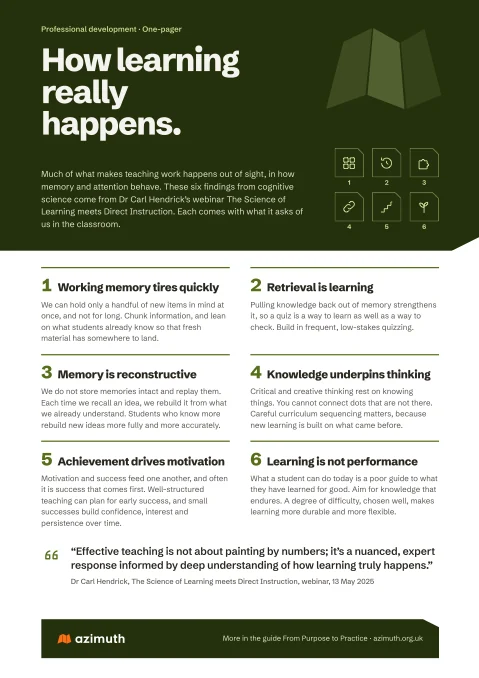
How learning really happens
A one-page summary of six findings from cognitive science and what each means for classroom teaching.
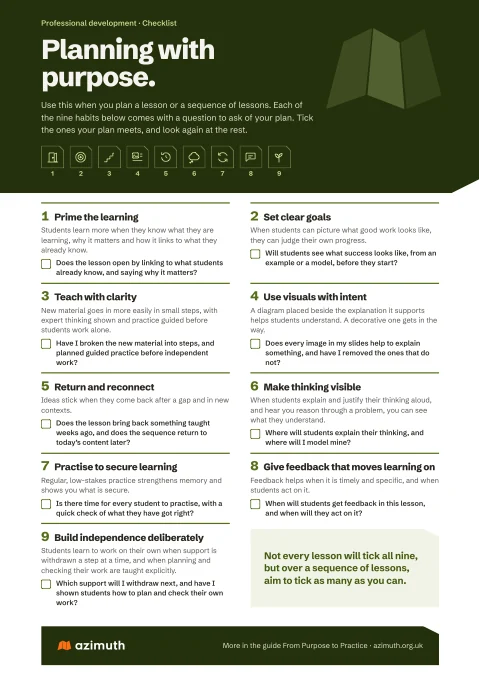
Planning with purpose
A checklist of nine evidence-informed teaching habits, from priming the learning to building independence.
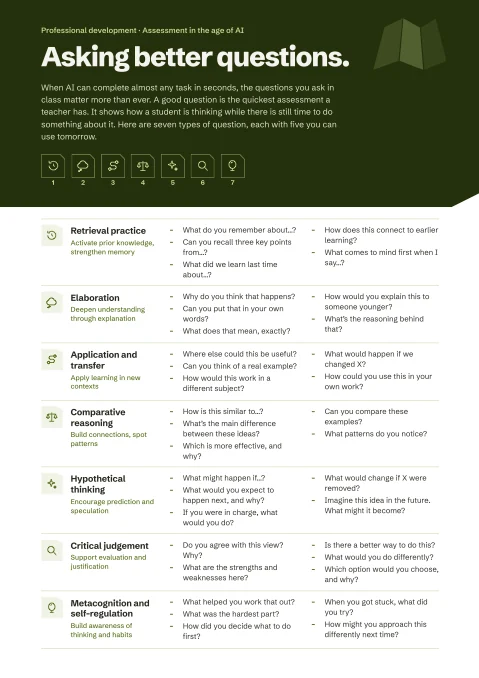
Asking better questions
A reference setting out seven types of classroom question, each with example prompts for finding out what a student understands.
Leading people.
For line managers, coaches and anyone leading a team.
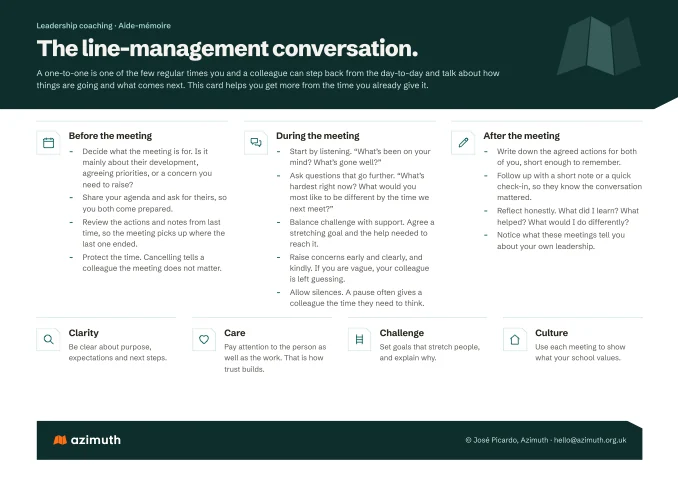
The line-management conversation
An aide-mémoire for one-to-one meetings, with prompts for before, during and after.
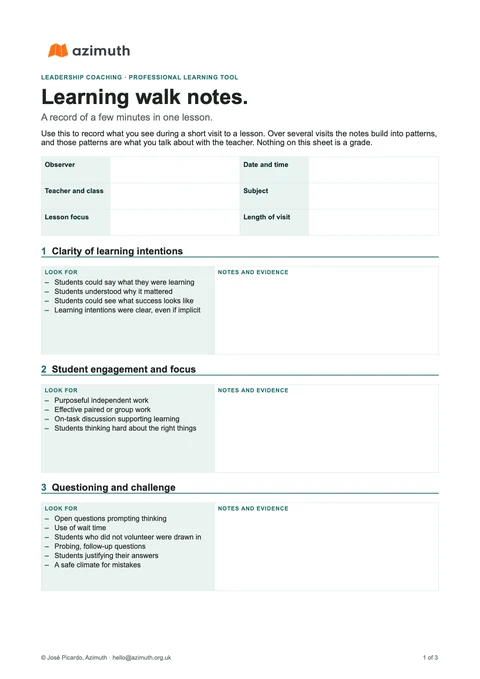
Learning walk notes
An editable template for recording a learning walk, covering eight areas of practice with prompts for what to look for.
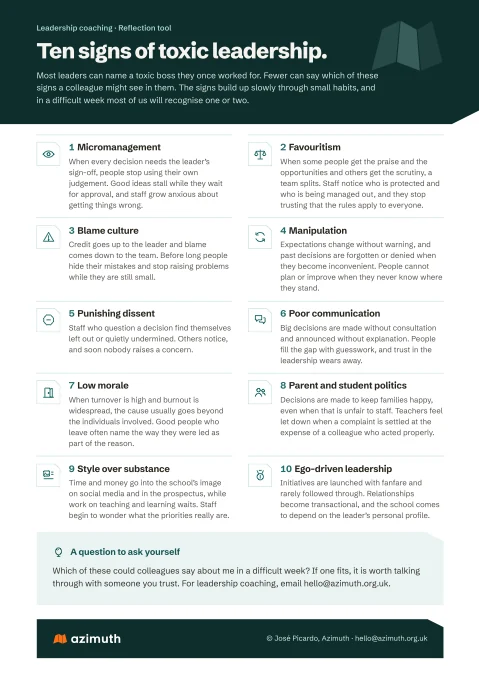
Ten signs of toxic leadership
A reflection tool describing ten patterns of toxic leadership and how each shows up in a team.
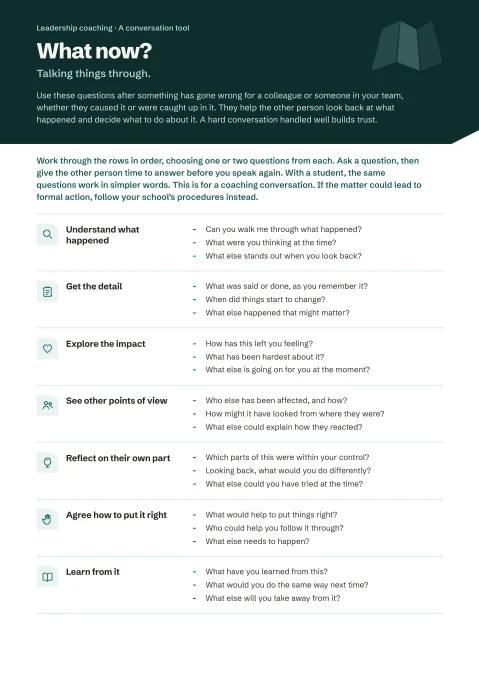
What now, what next
Question prompts for working through a difficult situation, moving from what happened through reflection and accountability to next steps.