Ideas, built.
I spent twenty-five years in schools, not in software. Since August I have used AI to build five working tools, each starting from a problem I knew from the classroom or the leadership office. Technical knowledge still helps, and the best tools will come from people who have both. What has changed is how far teaching expertise can now take an idea.
 Whyzo.
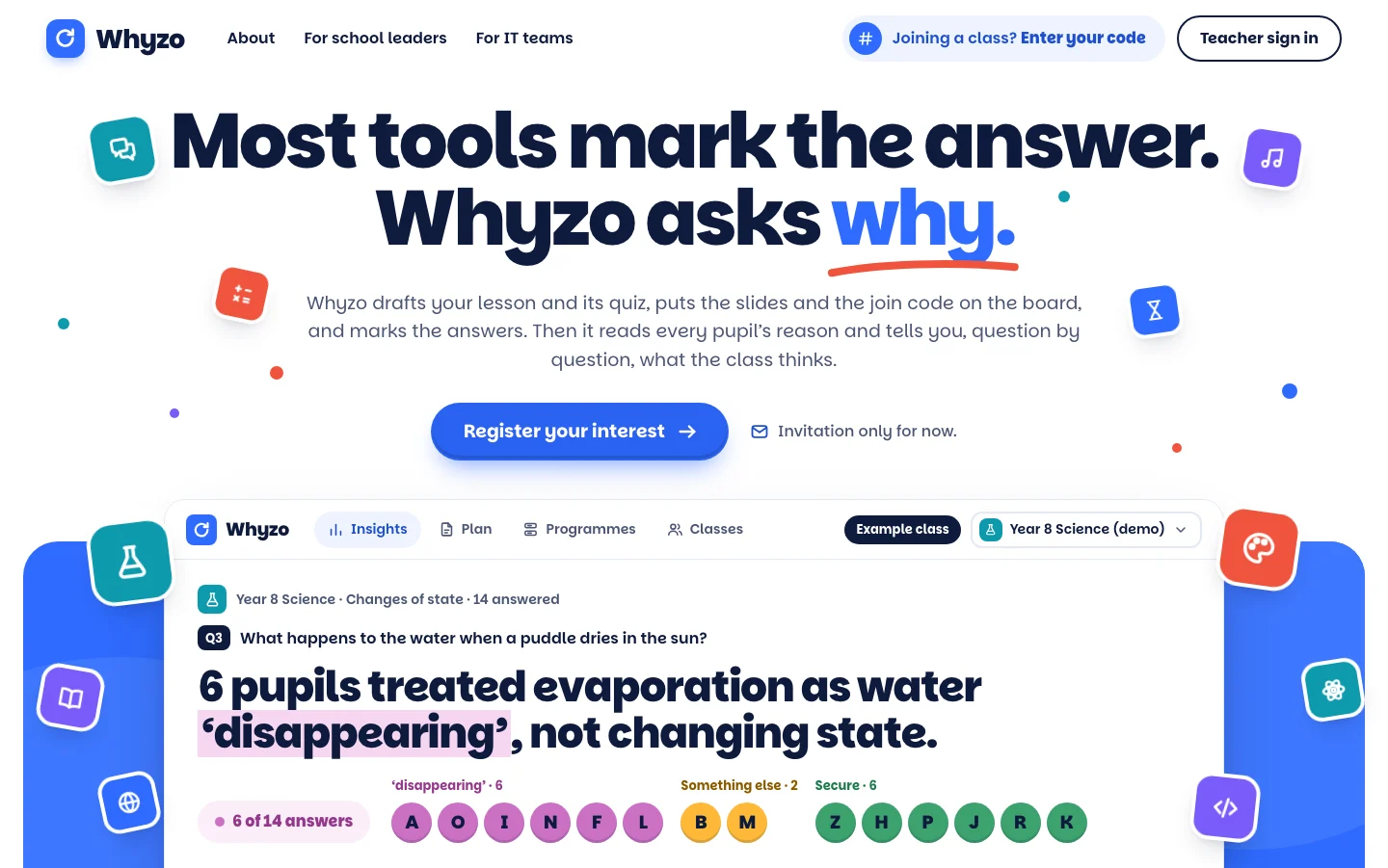
Most quiz tools mark the answer. Whyzo asks why.
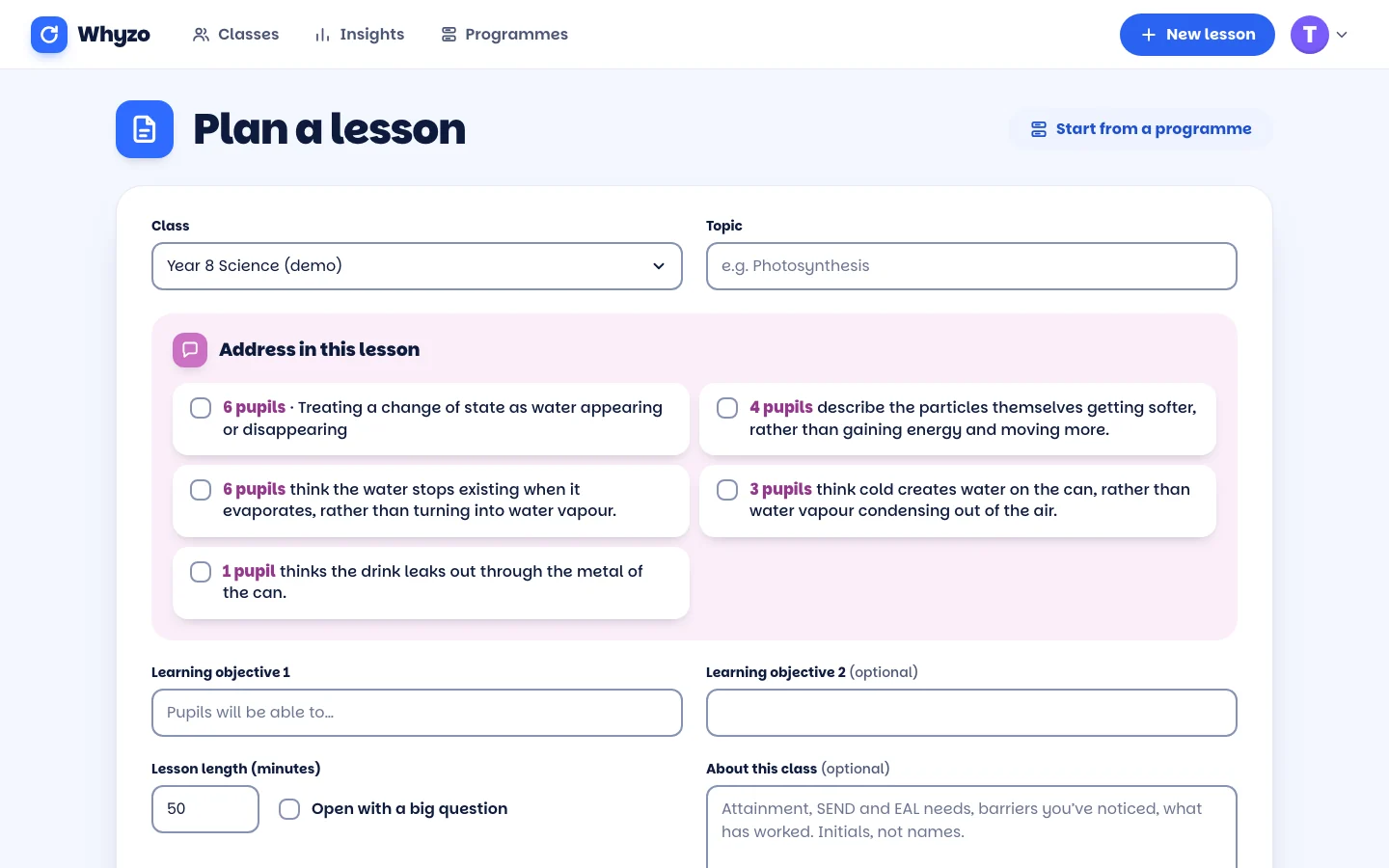
Pupils pick an answer and write their reason. Whyzo reads every reason, tells the teacher what the class thinks in a sentence with a count, and drafts the next lesson aimed at the misconceptions it found. Nothing reaches a pupil until the teacher approves it.
For teachersLive, by invitationwhyzo.app
The teaching behind it
A correct answer can hide a misconception, and a pupil’s reason brings it to the surface. Whyzo is built on that idea from formative assessment, and a review of the research on feedback and retrieval practice shaped ten changes to how it questions, responds and plans.
 Bearing.
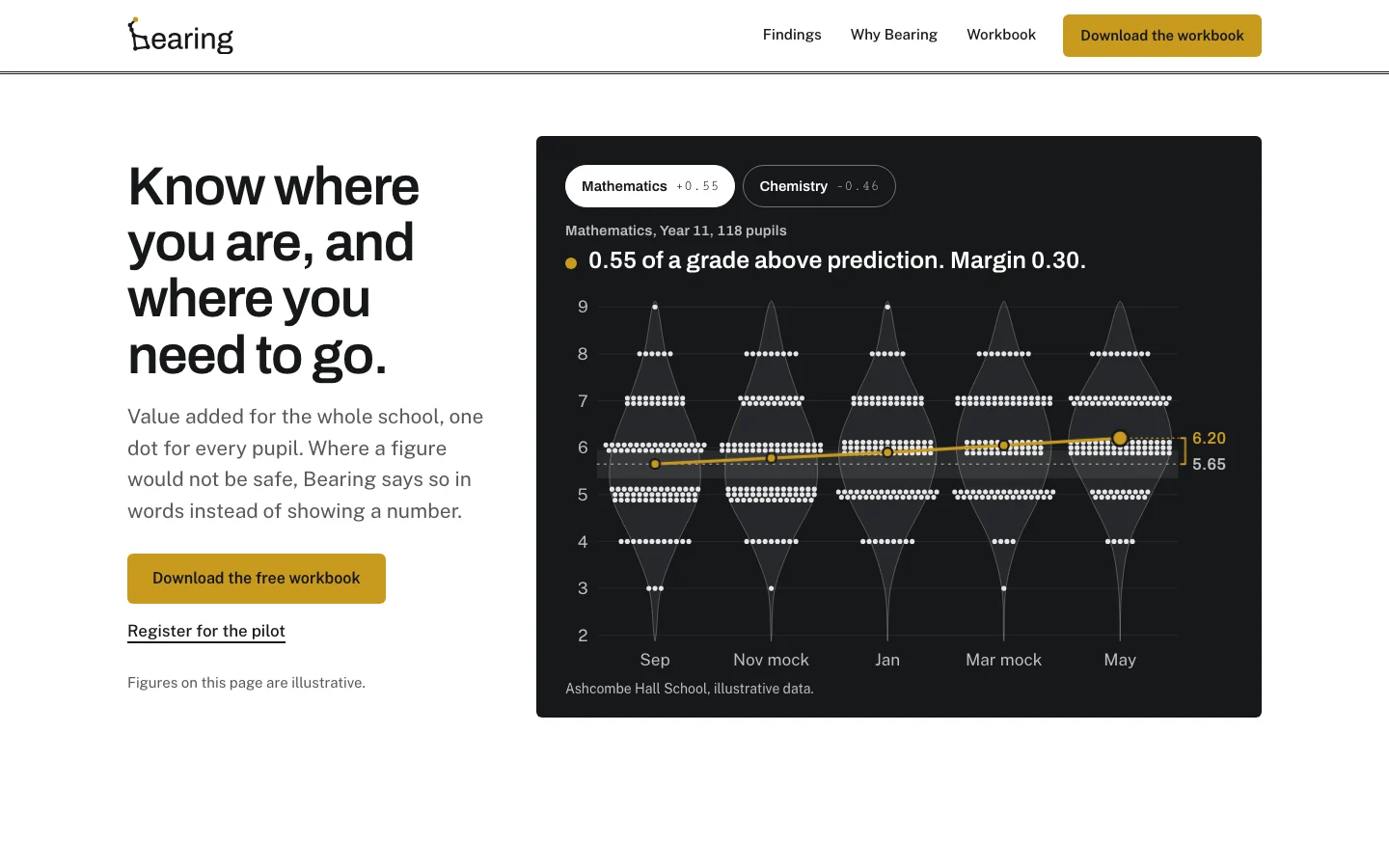
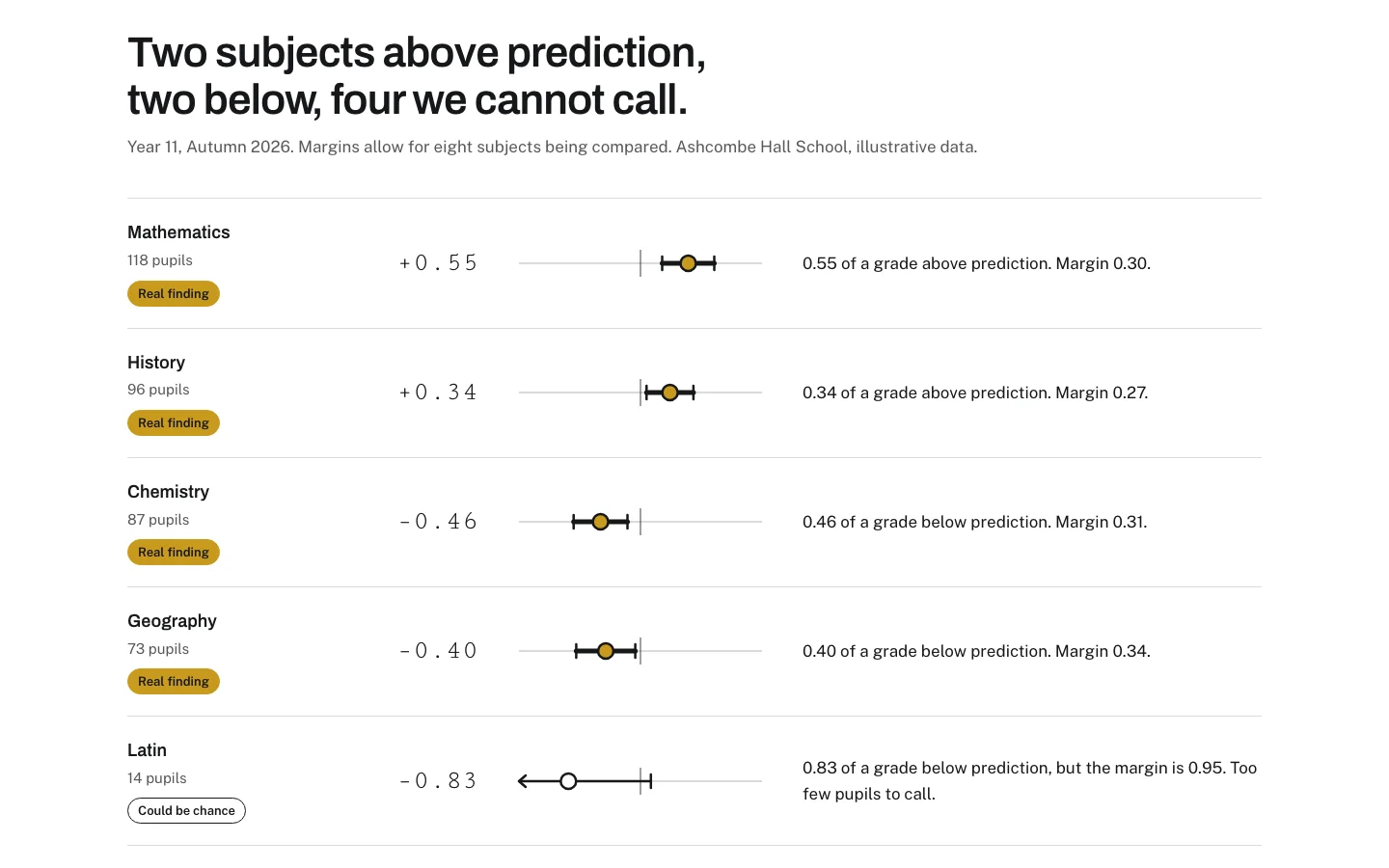
Value added for the whole school, one dot for every pupil.
Every figure carries a margin, small cohorts are withheld, and Bearing says in words when a difference could be chance. Built on my own years running value-added analysis as a deputy head, so departments are compared fairly and no pupil disappears into an average.
For senior leadersRegistering schools for 2027/28
The teaching behind it
It comes from years of running value-added analysis as a deputy head, and from seeing how easily numbers can be misused. Bearing is a tool for asking better questions: which pupils, which subjects, and what to change in the teaching.
And for everyday life.
Three more, built the same way, that I and the people around me use every day.
 Jools
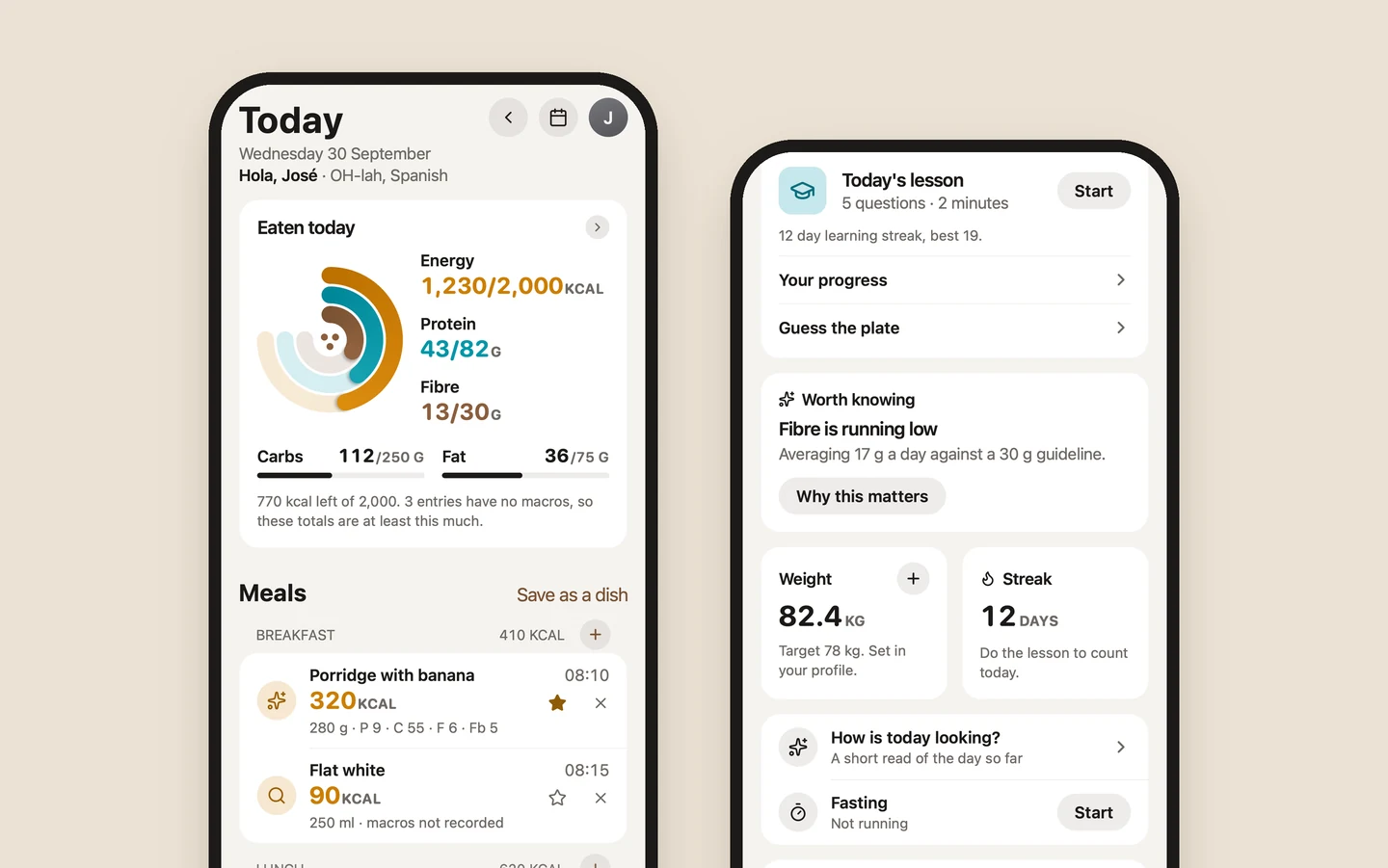
A food tracker that teaches you while you log.
Log a meal with a photo or a sentence and Jools estimates the nutrition, then a five-question lesson each day builds what you know about food.
For our householdIn daily use
 attick
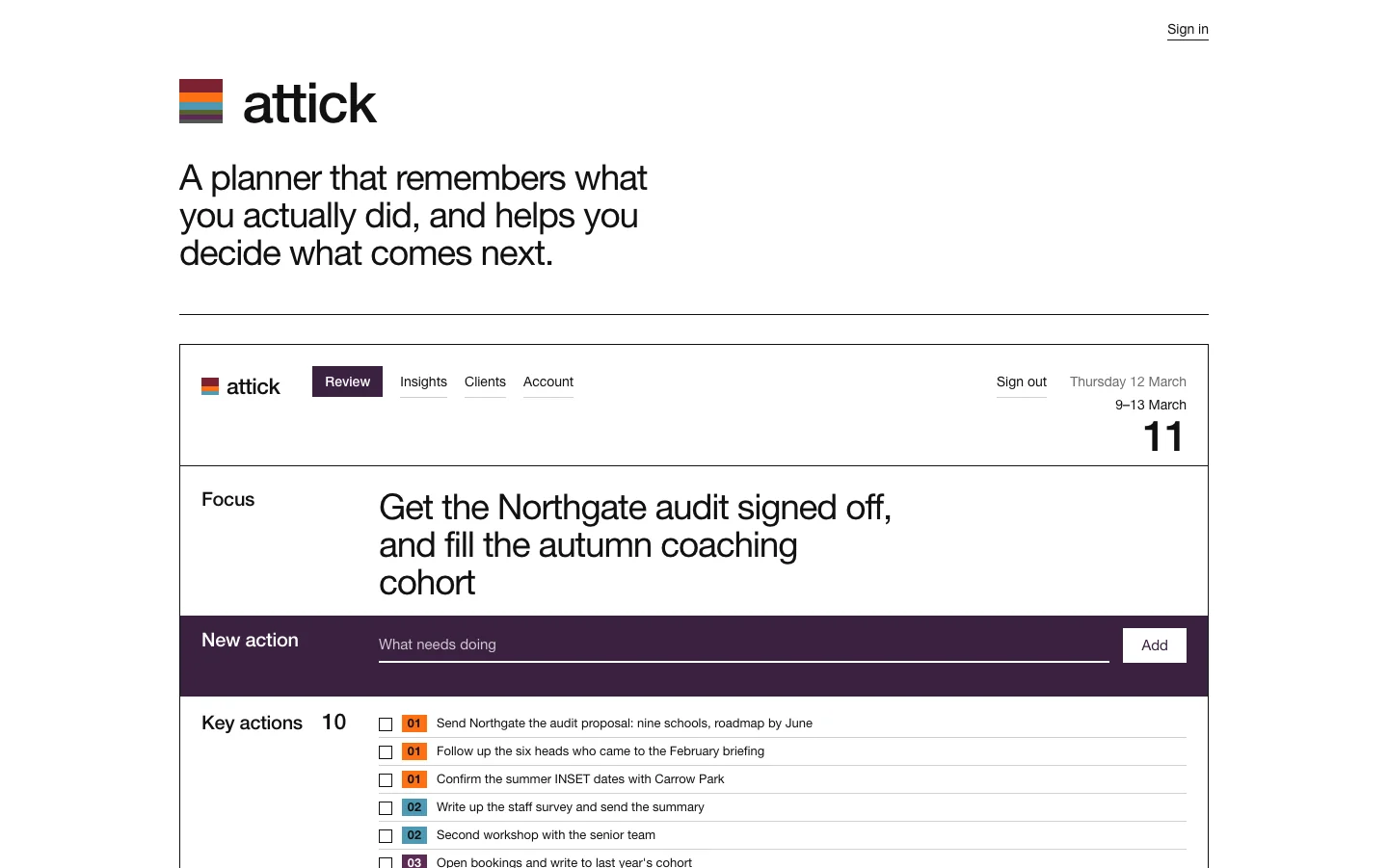
A planner that remembers what you actually did.
One focus, ranked priorities and a permanent log, so the end of a term answers the question that matters: did the work move what I said mattered most?
For a one-person businessLive, in daily useattick.app
 Roost
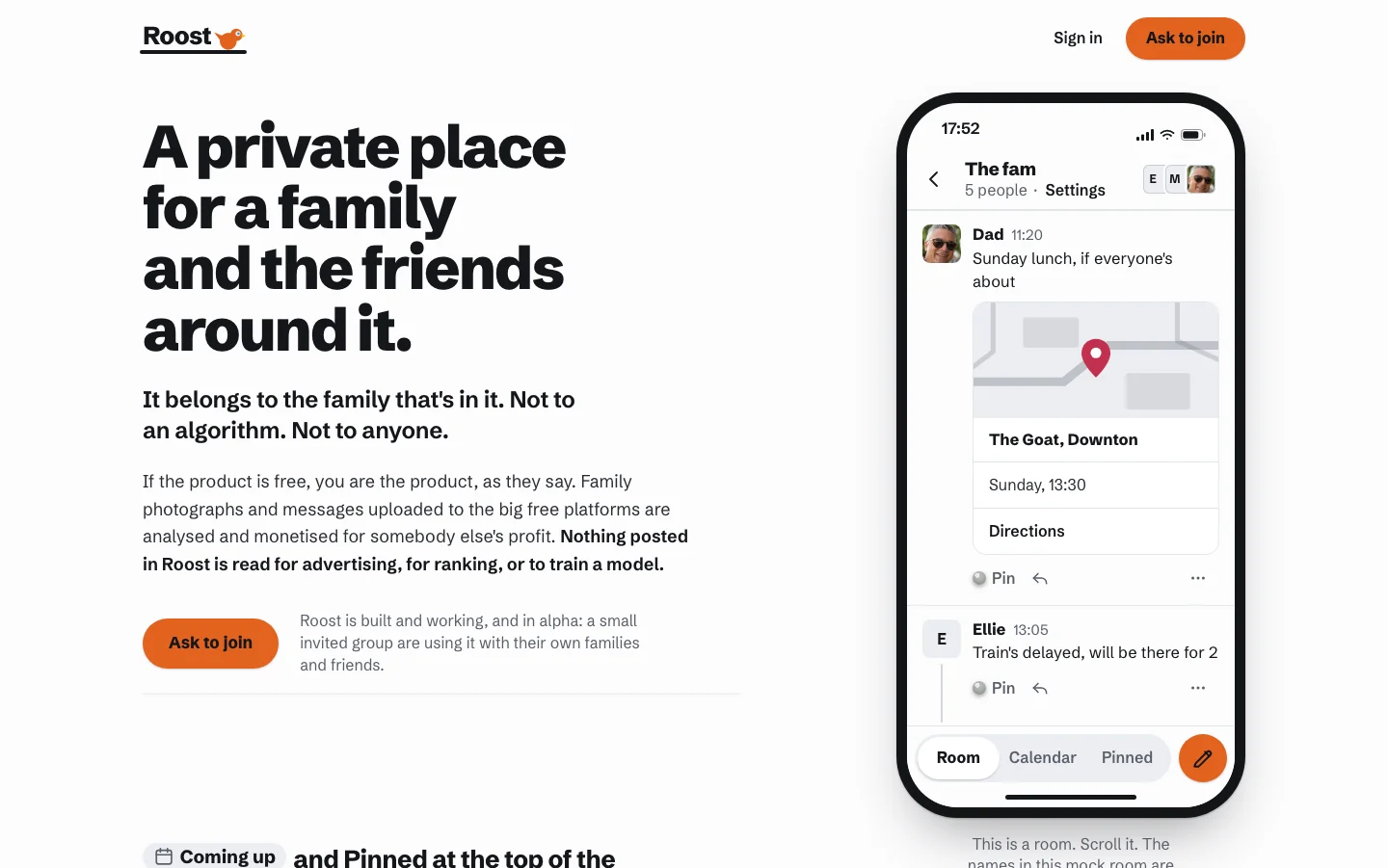
A private place for a family, with nothing to chase.
Rooms for a family, a trip or a wedding. No likes, no feed, no strangers, and nothing posted is read for advertising.
For familiesBy invitationmyroost.family
Where teaching expertise meets AI.
The overlap between educational expertise and technical skill is growing, and that widens what a school can do for itself.
The expertise
Teachers know the problem from the inside: the classroom, the timetable, what a pupil needs next. That should decide what gets built.
The tools
AI now does much of the technical work, so a teacher with a clear idea can reach a working tool. Technical knowledge still helps, and the strongest teams have both.
The guardrails
Teachers stay the authors of what they build, within clear limits: data protection, safeguarding and the school’s own policies. Nothing reaches a pupil without a teacher’s judgement.
Helping staff work this way, safely and with purpose, is part of my work with schools