
Description
The headache this briefing eases
Most schools have strong wifi, devices in bags and an acceptable-use policy on the shared drive. Underneath sits a question few leaders can answer with confidence: is any of it making the learning better?
Two-thirds of 13 to 18 year-olds were using generative AI by 2025. Their teachers, in the main, were not, and three-quarters of those who held back said the reason was simply that nobody had shown them how. So schools run on parallel strands: pupils fluent and unsupervised on one side, staff cautious and untrained on the other, and a working group in the middle that has met three times since September.
This briefing offers a way through that holds steady whatever the technology does next.
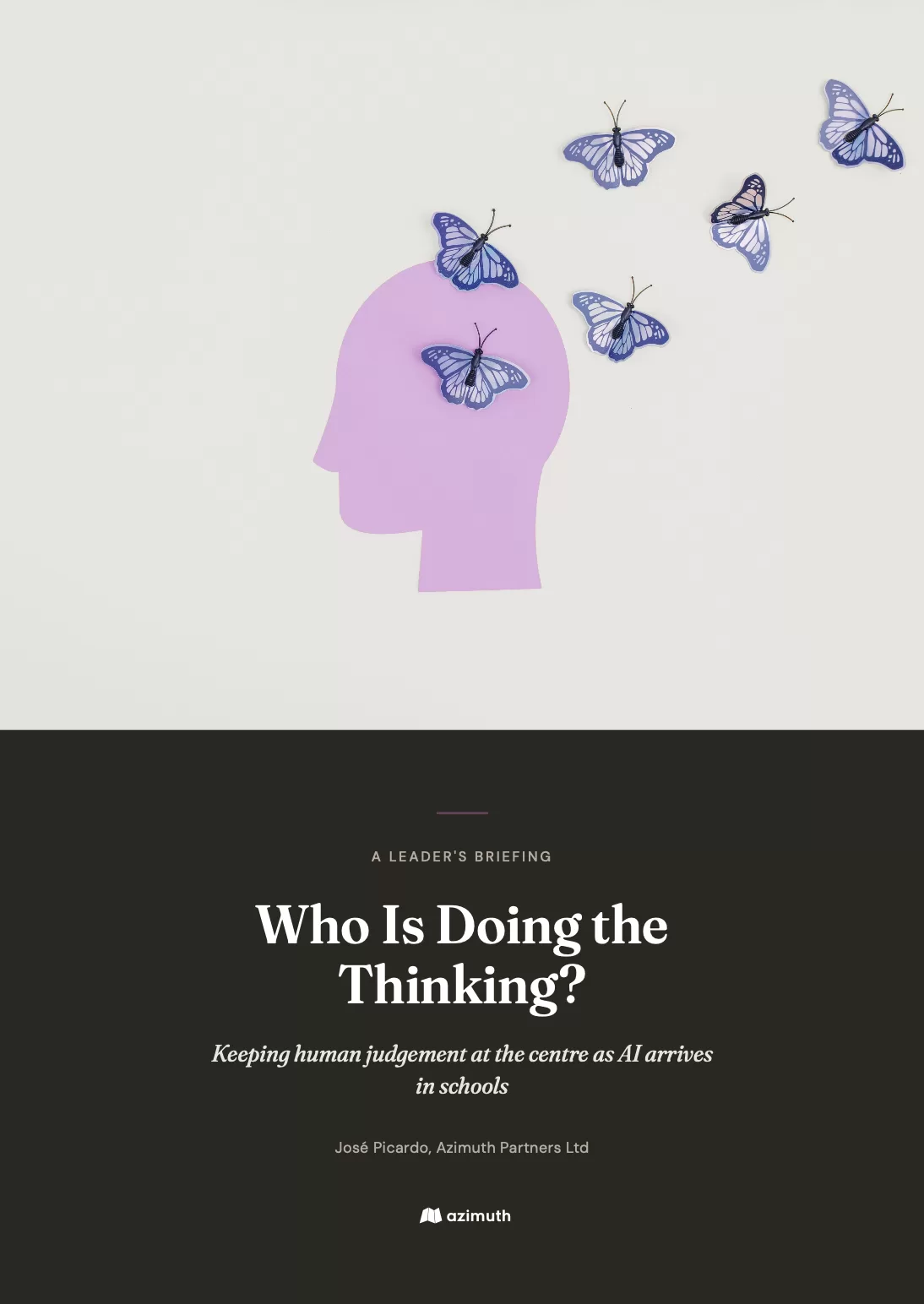
What it argues
Banning AI hands your judgement to caution. Blessing it hands your judgement to the tool. Both let an outside force set your course. There is a third option: a bearing of your own, confident about the gains and clear-eyed about the risks, taken from what your school is already for.
That bearing resolves into three leadership tasks. Protect the thinking that is the learning. Decide what you are willing to hand to the machine. Know whether any of it is improving learning rather than just being used. None of it needs new money. All of it needs leadership attention.
What’s inside
Eight short sections take you from why the decision is already made to where the argument gets harder, each grounded in current evidence rather than assertion. You will find the two exits that lead nowhere, the line every leader has to hold, the proxies that have stopped meaning what they used to, and the training paradox beneath them.
Then two practical tools: a six-question self-check you can take to your senior team, and six moves for next term that turn the argument into practice. If you read nothing else, read those.
Who it’s for
Heads, trust leaders and senior teams deciding what AI means for their schools. It takes about fifteen minutes to read. Read it straight through, or start with the self-check near the end and work backwards.
Where to start
Download the briefing, free. When you want to know where your school stands, the free Azimuth Digital Maturity assessment turns the self-check into a bespoke report in about ten minutes.